

Ariane Blackman, an eagle, soars through the sky, circles, and then swoops down to snatch prey in claws. She flies away clutching the field mouse and devours it whole: fur, small bones, organs, everything. Ariane Blackman swallowed by a snake, alive, as if Jonah inside the whale except no god commands this snake to release her, she escapes on her own.
The clear memories Ariane Blackman retains from a Shaman-led Ayahuasca ceremony experience in an Amazon rainforest.
Whenever I begin to write one of these profiles, I have most often established the lede in my mind, the opening paragraph to hook the reader, long before I sit to bang out the first draft. From the moment Ariane agreed to share her life with me I already knew how I would begin, how I would describe her as a little girl in Lodz, Poland, five years after the Russian Communists had defeated the German Nazis, her Jewish mother stuffing her into as many layers of clothes as possible, the two of them about to leave. Secretly. Leave Ariane’s father, leave Lodz, leave Poland, eventually leave Europe. I came to know Ariane, first and foremost, through reading a draft of a memoir she’s been working on, in one way or another, almost her entire life. A memoir of Ala Cale, her incredible mother, a Holocaust survivor, and the complicated relationship for over sixty years after mother and daughter arrived in Montreal to begin a new life. Yet, as much as that story is a theme in her life, it is not Ariane’s only story, nor does it define her, something I learned as we sat together, talked on the phone, and emailed one another.
We do need to explore that theme, for sure, the survival of Ala Cale, and the fact that a Catholic member of the Polish resistance known as Edward played an enormous role in her survival, a man she would marry and who would father Ariane. His resistance predated the Nazi invasion. As a teenager he fought with Józef Piłsudski against the Russians, helping to defeat them in 1920 in a counterattack that came to be known as the “miracle on the Vistula”. In 1939, when Germany and the Soviet Union divided Poland, her father ended up in Russian territory and successfully hid from the NKVD (the Soviet Union’s secret police agency during those years) until 1941 when they caught up with him and threw him in jail. At the same time, his first wife and two young children were seized and shipped to perish in Russian labour camps. Then, Ariane says, “When the Nazis invaded Russia, and he was already 40 years old, he joined the resistance (after escaping from the Russian jail cell — where he would have no doubt been shot), became head of Communications in the region and also helped my mother to survive by giving her a place in the resistance. Admittedly — because the Polish resistance was strongly anti-Semitic — he had to pass her off as his niece before they eventually married. My mother always credited him with helping her.”
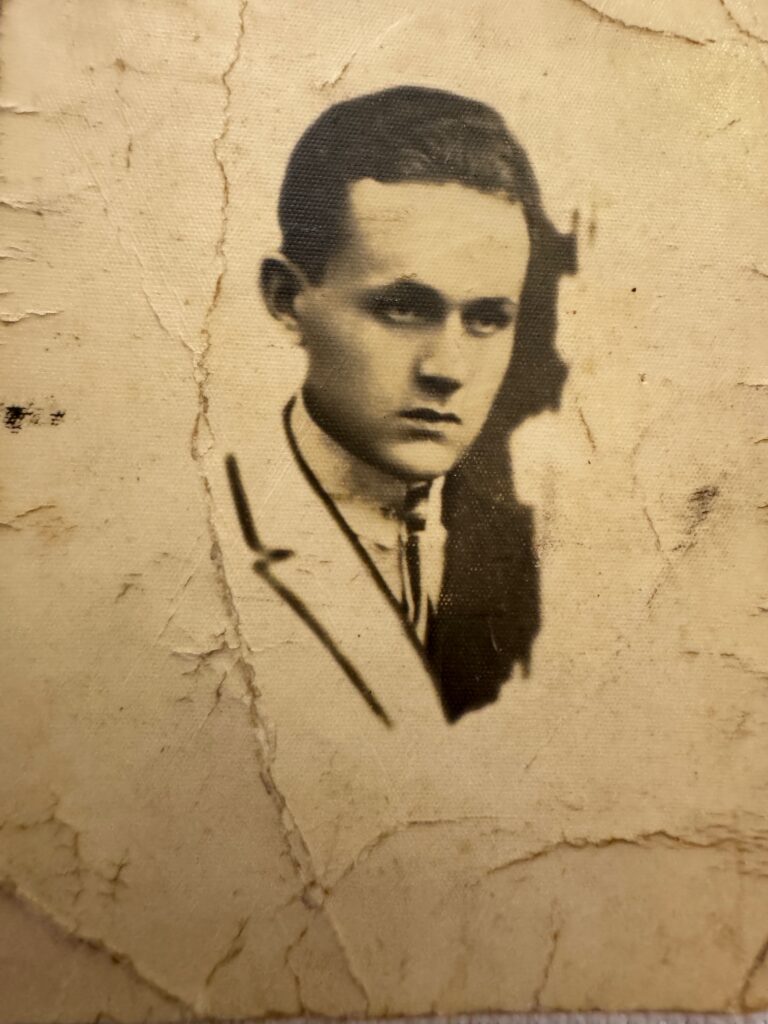
Ala Cale’s escapes from being murdered on the streets as a Jew, or sent to Auschwitz to be murdered in the gas chambers, were many and improbable and the details are best left for Ariane to share with readers when her memoir is finally published, with the planned titled You Will Live: The Incredible Escapes of Ala Cale. Ala’s mother, father, and twin brothers did not survive, only her older brother Edek. One of the reasons she survived, at least in the earliest years of the occupation, was because of her work in a medical laboratory, unpaid work for the Nazis. A brilliant science student, her ambition was to be a medical doctor, a career that she came close to but, in the end, never realized, something Ariane notes as “a lifetime regret”. In late 1948, over three years after the war, and after Edward and Ala were married in 1944, his first family showed up from the dead. Unbeknownst to him, they were part of the thousands whom the 1941 Sikorski-Maisky agreement had released from Soviet Gulags and eventually ended up in Valivade, India, a refugee camp that came to be known as Little Poland. After years of not being able to find them, he thought they’d perished in the Gulag and had felt free to marry.
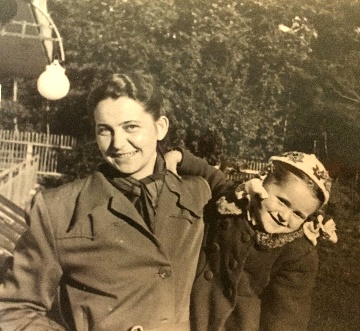
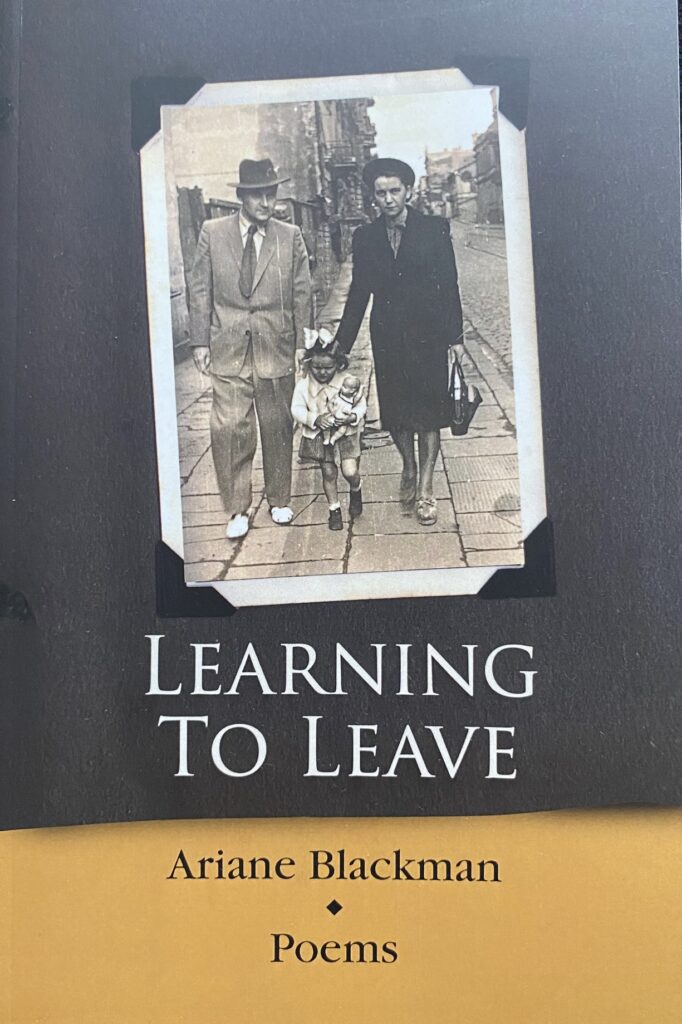
In spite of the complications of finding himself with two families, Edward stayed with Ala and tried to support his first family as best as he could. But for her own reasons, Ala decided to leave. In Israel she had an opportunity to obtain her medical degree but to do so meant she had to place Ariane in a kibbutz, as a ward. After a time, this was not an arrangement she could accept, and so left for Paris. Why they left Paris, after Ala had been accepted in medicine at the Sorbonne, Ariane never came to understand. What she did realize, though, even after they settled into Montreal permanently, was her own sense of displacement, fear of once again leaving. It is of no small consequence that Ariane’s last book of poetry was titled Learning To Leave. Her writing began when she was a little girl in Montreal, learning English mainly by reading comic books, like Little Lulu and Casper the Friendly Ghost, and children’s books like Nancy Drew and The Hardy Boys. She wrote poems and fiction and, around twelve years old, short pieces that would eventually form the memoir, trying to capture the stories her mother began to share, little by little, from time to time.
Ariane excelled at science and math and her mother wanted her to be a doctor. Which meant, for Ariane, that she was going to be anything but a doctor. Growing from child to teen, she became a daughter with a complex relationship with her mother, both a daughter captured by her mother’s stories and a daughter who rebelled at her mother’s stricture. As Ariane told me sitting at her kitchen table one day, “I always knew she loved me,” but as a child of a Holocaust survivor there are multiple dimensions and one of those is “shielding yourself from their trauma.” Something Ariane began to understand after she read Helen Epstein’s book Children of the Holocaust: Conversations with Sons and Daughters of Survivors. As Epstein said of her efforts to write the book, “I set out to find a group of people who, like me, were possessed by a history they had never lived.”
So, despite not becoming a doctor just like her mother, Ariane graduated with a B.Sc (Science) degree from McGill University, majoring in biochemistry and physics. Along the way she met a guy named Jim at a friend’s pool party and they married in 1970, but not before Ariane went to Spain for four months so that she could learn Spanish. (Ariane speaks four languages — English, French, Spanish, and Polish — though insisting that she speaks English well and the others badly). They mutually agreed to move to his hometown, Toronto, a place that, she says, provided “just the right distance from my mother.” She enrolled at the University of Toronto and received her Masters in Experimental Psychology, educational training that most often leads graduates into research, which is the path Ariane took. First with the Clarke Institute — that has since merged with other institutions to form the Centre for Addiction and Mental Health — then Ministry of Transportation, and finally Bell Canada, where she stayed until taking a package in 2005.
I asked Ariane when she began to write routinely as an adult and she responded, “from the 80’s on I would put my daughter to bed and start writing at around 10 pm — sometimes till one in the morning.” During the 1980s her and Jim divorced, sharing custody but, as Ariane says, “it was about 70 for me and 30 for him. We did the best we could — neither of us is perfect. For many, many years now, he and my sister-in-law come over for family celebrations including all the main holidays.”
That line — “neither of us is perfect” — that self-awareness, and surrounding awareness of the world, captures Ariane as much as any one thing can capture her. Which is also to say, no one thing can capture her. Again, at her kitchen table, she said to me with a smile “I’d be a hermit if I had my druthers.” A little while later she added that she saw herself as a “contradiction in terms.” Her first self-observation is rooted in her trauma of leaving, wrapped up within her mother’s trauma as survivor: not standing out, being in the shadows, lessons her mother learned as a Jew during and immediately after the holocaust. Weeks later, when we spoke and I explored her comment of being a “contradiction in terms”, she offered that perhaps she meant that as much as she sees herself as a person of science, she is open to other ways of knowing the world. “Just because we don’t see it doesn’t mean it doesn’t exist.”
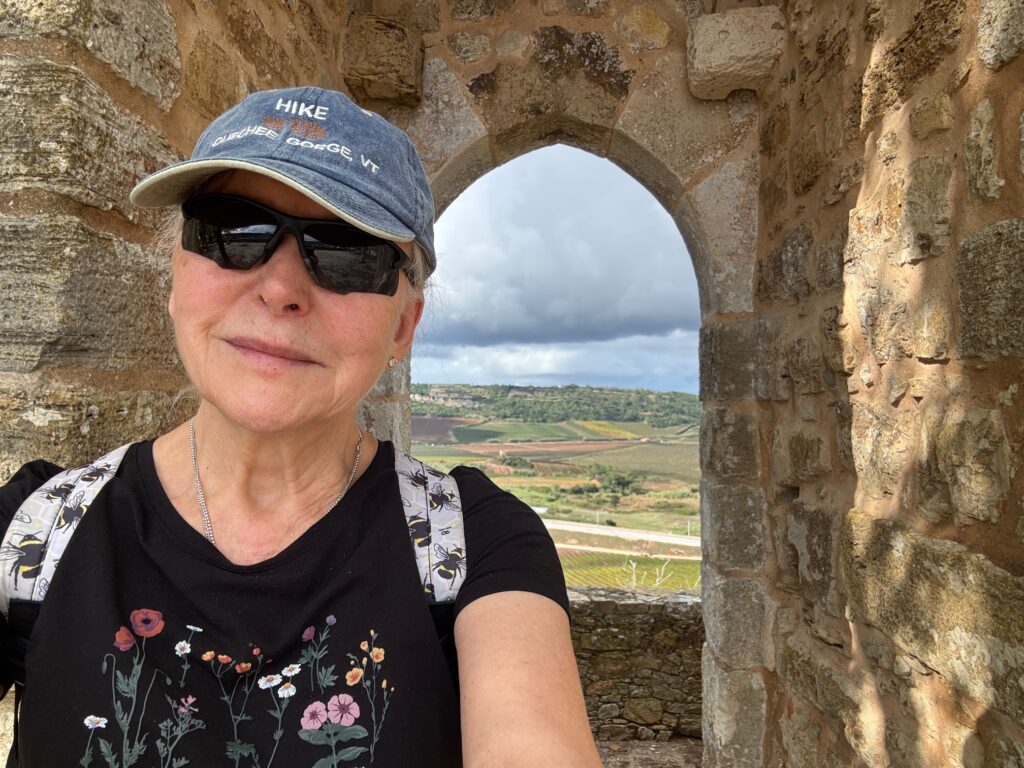
Ariane has taken a course of past life regression with Brian Weiss, a psychiatrist considered to be a leading authority. She has studied energy medicine, taking courses from numerous advocates. A number of years ago, Ariane badly twisted her ankle the day before leaving for a trip to New York City that would require a lot of walking. Instead of heading to the emergency room, or cancelling her trip, Ariane put into action her Qigong practice — a Chinese based system, related to Tai Chi, of exercise, poses, and breathing — and carried on with her plans, able to walk the countless steps one takes to truly enjoy Manhattan. Even as a lover of words — a poet, a novelist, a creative non-fiction writer — she thinks we need to acknowledge the intuitive, an understanding beyond words. About the only thing Ariane rejects out-of-hand, her one great dislike in the world, is arrogance, “the people who think they know everything.”
After that conversation, I didn’t explore any further her comment about being a “contradiction in terms”. Rather, in my notes, I replaced the word contradiction with refraction and began to think of the entirety of Ariane Blackman in terms of refractions of a life.
While still married, and when her daughter Jo was very young, a good friend of Ariane’s approached her to help with writing an ad to place in the personal interests section of the classifieds. There was initial success for her friend when an Ontario judge responded right away, but the relationship never took hold. Years later, after her divorce, Ariane decided she would try the personals as a way of meeting someone and wrote her own ad. Can you guess who responded? Yup, same judge. What word is most appropriate? Serendipity? Synchronicity? Regardless of how you view it, Ariane felt comfortable given that her friend never had a meaningful relationship with the judge and he and Ariane stayed together for almost two decades, spending winters in Mexico, eventually buying a house there.
“We went to Mexico for the first time in 2000. When we got to Ajijic, it was on a lake and the bougainvillea was blooming and the weather was warm. He wasn’t yet retired but he wanted to find a place to retire. We found a real estate agent who showed us land and potential house plans. I redesigned the house plans and we waited for it to be built. I think we took possession in 2002. I went down to make sure everything went according to plan, sign papers and take possession. I think he was depressed at the time so he didn’t want to go. So, at first he went down for six months and I joined him every other month — I worked for Telecom so could work remotely some of the time. And the summers we spent in Toronto.”
During this time, Ariane’s writing became more prominent within her life, especially poetry. Again, in her words: “What I can say is that I liked poetry and had been writing it — and also wasn’t very knowledgeable about poetry. But because I dabbled in it for so long, I think at least I hear the underlying rhythms. Maybe.” I turn that last adverb around and say, maybe Ariane is a bit too self-deprecating, like her deflection on speaking four languages.
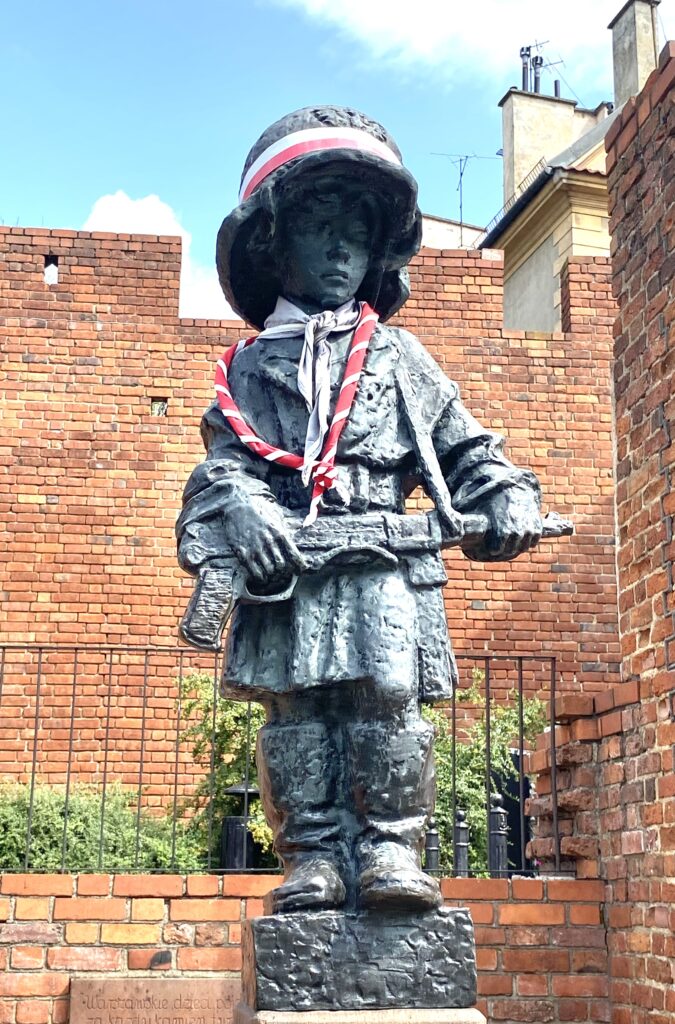
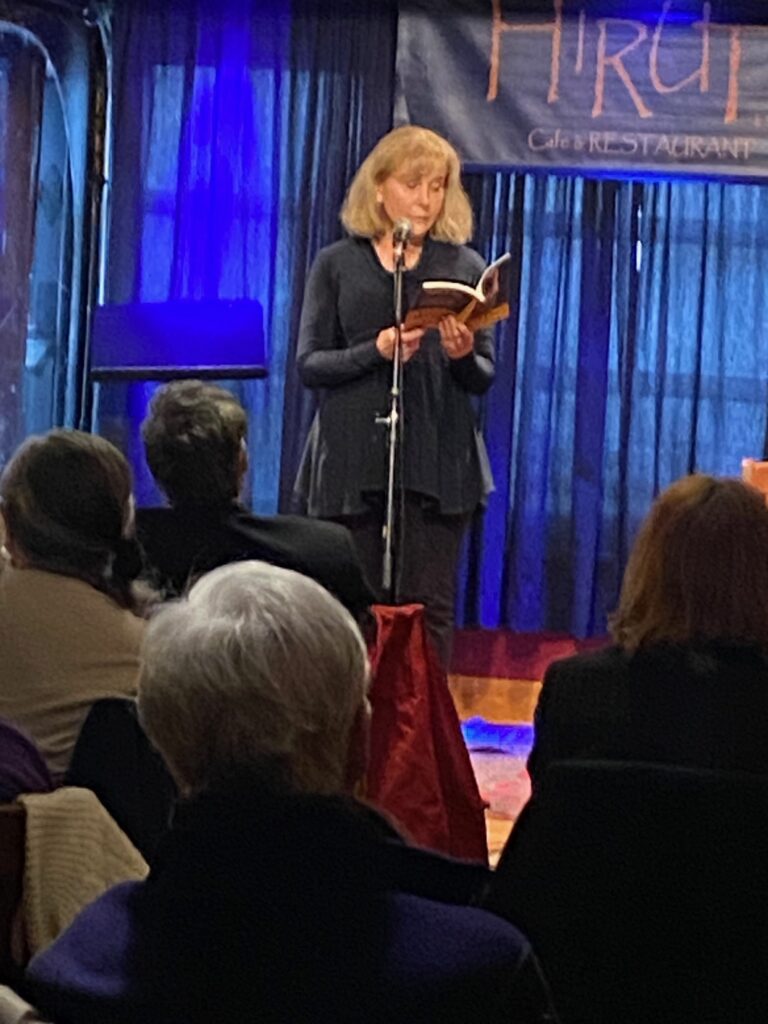
In 2013, Lyrical Myrical Press published her poetry chapbook, No One Sleeps, and, respectively, in 2018 and 2023, Aeolus House published her full-length poetry collections, The River Doesn’t Stop and Learning to Leave. A novel, The Unexpected Journeys of Lawrence Tyrone, was published in 2019. She had thrown herself into various workshops, writing groups and writing programs. Vaughn Poets is one group she remembers, and before that she worked with the late poet Luciano Iacobelli who founded Lyrical Myrical Press in the early 2000s. While taking a Humber College program on novel-writing, she began a novel which she titled “Foxtracks, which took place during the FLQ crisis in Quebec — young girl dealing with her aunt’s circle of friends’ experiences during — drum roll — WWII.” And then adds, “We circle our themes — don’t we?”
As much as that theme, her mother’s life and her connection to it, she’s explored the world in many other ways through extensive travel. I asked her for a list and what she provided I can’t, for sake of space, replicate, but it includes some forty countries, ranging from ocean diving trips off various Caribbean islands, journeys to various African nations, one visit spending time with the bushmen and women, several Asian countries — wandering the Ankor Wat and Ankor Thom ruins in Cambodia, for example — across both Canada and the USA, and many times to Europe including, of course, returns to Poland. And then there is that Ayahuasca ceremony in South America, of which, she noted in a long email, took place as part of a much broader trip.
“Peru and Ayahuasca was after I left the judge. I have friends who are into alternate medicine and Shamanism and who know Shamans (I’ve also been to Kauai a few times to learn from a Shaman there). I had this desire to go to Peru and Machu Picchu so I called a friend to see what she was up to and whether she was planning anything. I think she had been thinking about it, but when I called she put the plan into action. We ended up with about eight women I think — for the trip to Machu Picchu and the hike up the Inca trail. Hiking up to 12,000 feet needs stamina. I had a pocket full of coca leaves and was doing switchbacks all the way up the trail — having optimistically assumed I was in shape.
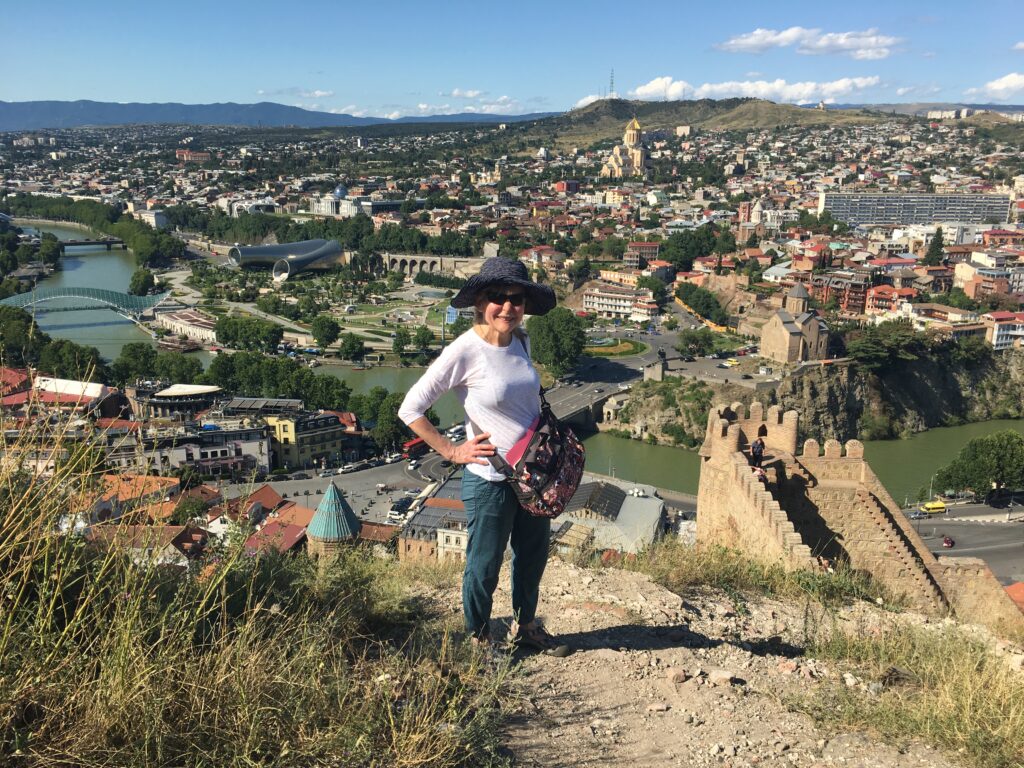
“After a week in Cuzco and Machu Picchu, six of us travelled to the Amazon to be with a Shaman — who my friend knew. We spent some time at his jungle lodge near the Amazon River, where it took three days to make the Ayahuasca brew. First finding the vine and leaves that are the components and then boiling and decanting three times over three days. In the meantime, we took part in Ayahuasca ceremonies — and then when our brew was ready, we had a final ceremony before hiking into the rainforest to where he was building another lodge (rain, mosquitoes). Luckily, we had porters to carry bedding and food although we also had our own backpacks.
“In the jungle rainforest the paths are mainly clay, so when it rains there is nowhere for the water to sink into. Leaving the rainforest retreat, we waded through hip-deep water. Given that the path was slippery clay under the water most of us managed to slip and fall. On the way back we stopped at the lodge of the Shaman’s father, who was also a Shaman, and we had a final ceremony.
“What was amazing? So many things. Climbing the Inca Trail. Seeing the change from sea level to mid Alpine — the tiny orchids thriving — the way our lungs need air — how we take air and our lungs for granted until we learn something different. The fact that I made it up to Dead Woman’s Pass. And then the steep stone steps on the way down (part of the Inca trail). The air. The living air. When we finally would have been able to see Machu Picchu below us — there was fog to obstruct our view. And then for a moment the fog parted and there it was below us — high up on the top of a mountain — but we were higher.”
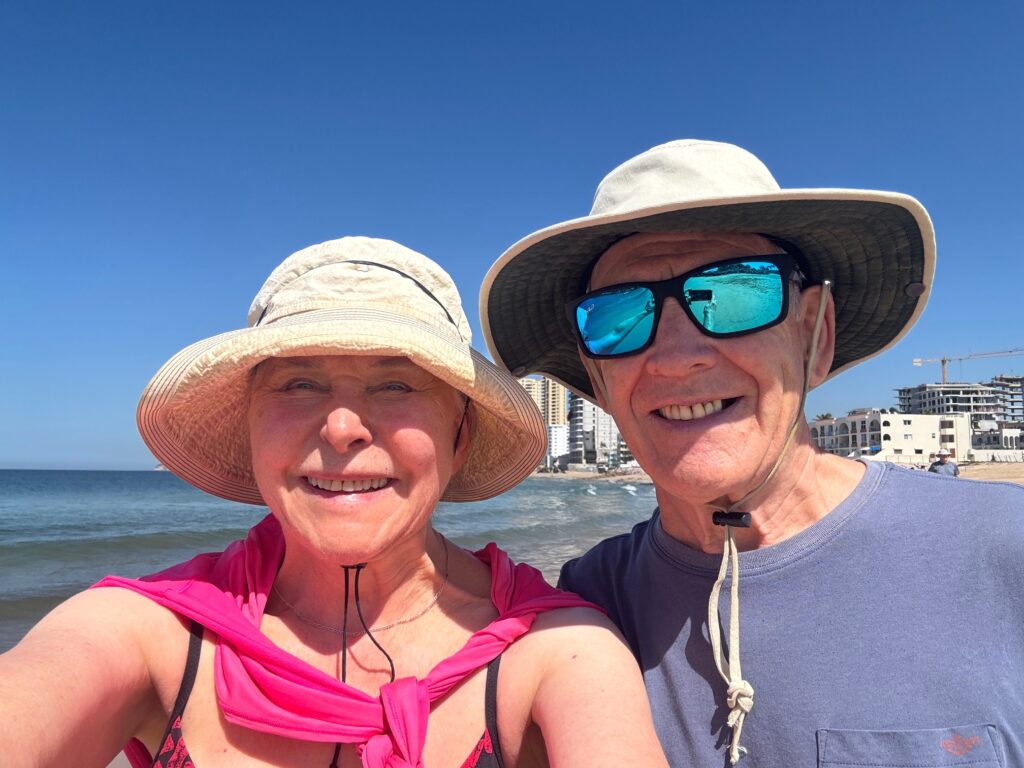
After Ariane and the judge separated, sadly, her life partner, whom she met in 2010, died in 2017. These days, she is in a relationship with a retired chemical engineer, a wonderful guy named Ron, originally from England, and they go back there sometimes. As I noted, there have been many return trips to Poland, a few with her adult daughter Jo, to gain more insight into Ala’s life and Ariane’s connection to it, including getting to know her half-siblings, her father’s other children. But as you’ve witnessed, there are many aspects to Ariane’s rich, open, explorative life. As regards to Ala Cale, Ariane’s mother decided to move to Toronto in 2005 when living alone in Montreal became too much. The loving and tense mother-daughter relationship continued, sometimes remembered with humour by Ariane. One day she went to her mother’s senior building to take her shopping and in the elevator on the way down Ariane spoke in Polish. Her elderly mother had become incontinent and Ariane was asking if they needed to stop at a store to purchase more adult diapers. In response to her question, her mother said sharply, “Speak English!” To which Ariane ruefully smiled and continued in Polish. “In an elevator full of people, do you really want me to ask you in English if you need more diapers?”
In 2019, Ariane was accepted into an international residency for “talented writers from across English and Spanish-speaking worlds” called Under the Volcano. In her bio on their website Ariane wrote of herself: “Although it has not been my day-to-day profession, I have been writing most of my life — fiction, non-fiction including creative non-fiction and poetry. The hardest writing task has been to complete my mother’s memoir, which I probably started around twelve years old or thereabouts, when she started telling me her stories. At one time, a number of years before she died, I asked if she would like me to show her what I had. No, she said, she would do it herself. It might even be easier if she could dictate it. I bought her a mini tape recorder — and abdicated my deeply felt responsibility.
“As I was going through her belongings, after she died, I found the tape recorder, encased in the original packaging. I still have so many questions I never thought to ask.”
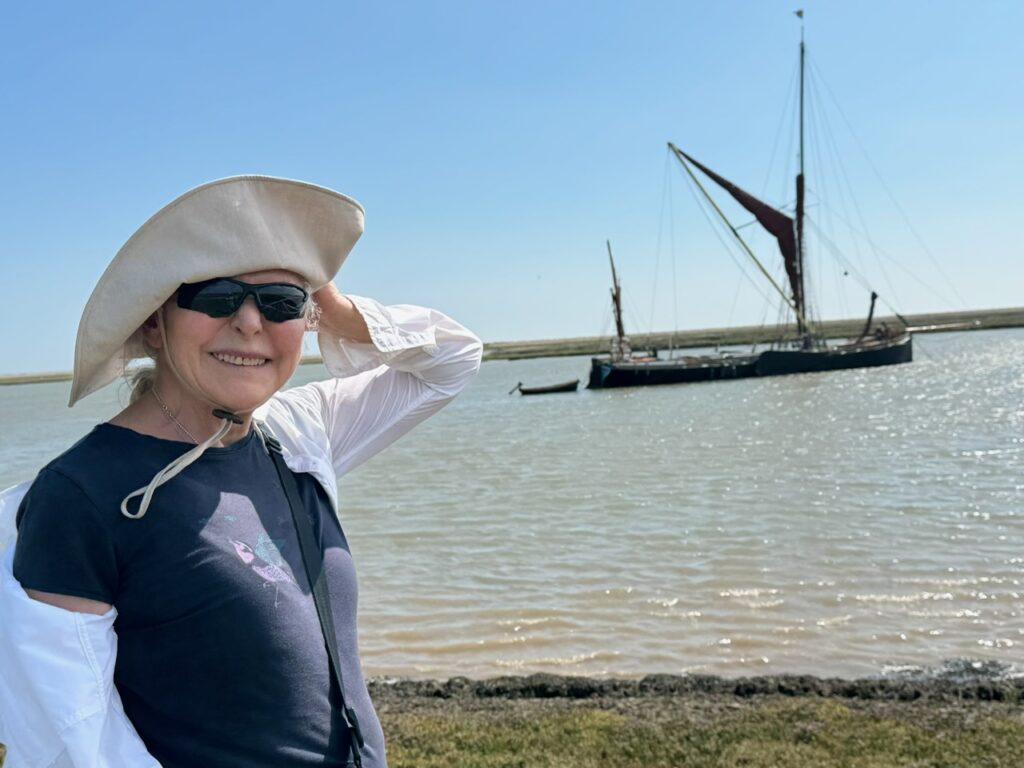
I would love to one day see the published version of You Will Live: The Incredible Escapes of Ala Cale available for the world to purchase. But most of the words written by writers are never published, they sit open on desks and tables, or are stored in various drawers, cupboards, boxes. Writing the words is what true writers do, live within the struggle, and having already dedicated her poetry collection Learning To Leave
“To the memory of my mother and father,
members of the Polish Resistance,
survivors, both”
maybe that it is enough. Ariane Blackman, daughter, honours Ala Cale, mother, in the struggle of writing the story, and the difficulty of it all is the reality of it all.
Still, I’ll be first in line to buy a copy if the memoir is published.
Next up is Suzanne Craig-Whytock, educator, writer, one-time dance DJ, antique dealer, radio host, and now a publisher with her own company, DarkWinter Press.
I hope you come back.