

Please allow me to begin this profile differently than usual by quoting some Ontario driving statistics. Ontario’s collision rate among drivers aged 16 – 19 dropped by 31 per cent in 1995 compared to 1993. For that same age group, Ontario saw a 58 per cent decline in the average fatality rate of drivers when comparing five year spans of 2006 – 2010 to 1989 – 1993. Now allow me to weave the human into the stats. I’m sitting across from John Hughes in his living room, talking about his 28 years in government service, and he says: “The thing I’m most proud of is putting graduated licensing here.” The difference maker in those statistics is that Ontario became the first jurisdiction in North America to implement young driver legislation where a person had to earn their license in stages, with certain restrictions in each stage. Legislation implemented in 1994 that saved teenage lives. John Hughes, then Director of the Safety Policy Branch for the Ontario Ministry of Transportation, drove — pun intended — that change. Contrary to Ronald Reagan’s famously snide remark, there are times when a person who says “I’m from the government and I’m here to help,” knows what they are doing and their help is meaningful. Reducing teenage deaths is meaningful, right?
I first met John Hughes on Friday, September 12, 2003, in Huntsville, Ontario. I can be precise about the time and place because it was my inaugural trip to The Fall Classic, an annual golf tournament created in 1993. One of John’s best friends is Paul Shervill, a former government colleague who went on to Union Gas, enjoyed the wonderful privilege of becoming my boss, and for reasons unknown extended me an invite to “The Classic”. To quote from the memory book John produced for the tourney’s 20th anniversary: “It started small, this thing that has become known as ‘The Fall Classic’. What began as a simple weekend of golf to celebrate the end of a fastball team’s season, has grown to a 3-day event, complete with a great prize table, various golf competitions, great food, much drink, and lots of laughter. In the 19-year span of The Fall Classic, the field has stretched from a low of 8 golfers to its present size of 40 golfers. In that time, I count 78 people who have participated.” Adding to John’s 20th year retrospective, I note that as The Classic nears its 35th anniversary, 78 is now getting dangerously close to the age of many participants, the prize table has disappeared, drinking has declined, but the great food has actually improved, and the laughs just never quit. Oh, and this: although John wasn’t responsible for the first year — honours go to Doug Drysdale of Drysdale Tree Farm fame — he quickly became the organizer, rightfully earning the title Commissioner. The Commish to his Classic golfing pals, if you don’t mind.
Born in 1947, John lived in the same Toronto house on Shaftesbury Avenue from the time he was brought home from the hospital until the time he left to marry. For those of you somewhat familiar with Toronto, Shaftesbury runs east-west along the north side of the old Canadian Pacific Railway tracks east of Yonge Street. On the south side of the tracks, at Yonge, is the LCBO’s Summerhill flagship liquor store, the one time CPR North Toronto Station (1915 – 1930). As John emphasized to me, “The house was 40, 50 feet from the train tracks. When we finally got a TV you had to go over — no remote controls then — to turn up the volume when a train rumbled by.” He explained that the semi-detached house was built in 1910 and his parents bought it right after the Second World War using his father’s war pay for a down payment.
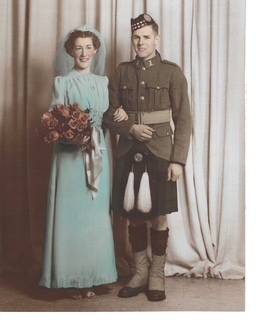
John and his sister Cathy had a complicated relationship with their father. “My dad was not the best dad because he drank too much.” Never a drinker before joining the army and leaving Canada, the war changed his dad. Jack Hughes was a soldier for six years, spending the entirety of the Second World War in Europe. “He was there from age 24 to age 30, if you can believe that,” John said, slightly shaking his head. “That’s the prime of life.” He experienced battles in Italy, including Sicily, “and ended the war in the hospital in London because he had contracted malaria. He didn’t talk too much about the war.” Jack Hughes came back a changed man, the teetotaler now a drinker who couldn’t handle his booze. “My mom kind of tolerated it, you know, but it was difficult because he couldn’t be counted on to bring home the paycheque.” That said, it certainly wasn’t all bad times.
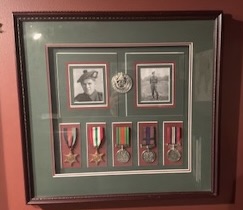
It was, as I stated, complicated. “We had a small backyard about the size of this living room and when I was small he’d put a hockey rink there. My dad always flooded it. He was okay when he was sober. And he actually didn’t drink that much, but he just couldn’t handle it. The trouble was, he’d go out with the boys after work and I’m sure he’d start buying rounds and making stupid bets. The first job I remember him having was as a milkman. The horse and carriage. My mom used to send me out with him at Christmas so the tips would come home. During the best of times, my dad was kind and generous, and there was a ‘spark’ between my parents that I never noticed with other couples around me. Later in life, he cleaned up his act a bit, and was a good grandfather to his four grandchildren.” And it is apparent how proud John was of his father’s sacrifice. He guided me to the home office/den where he keeps a lot of personal mementos. Among them is a framed display which includes soldier Jack Hughes along with his 48th Highlander medallion and the five medals he received, including the 1939 – 1945 Star, awarded to those who served the entire duration of the war.
John’s memories of his mother, Betty, are anything but problematic. In every moment of conversation about his mom, you can hear the appreciation and respect in his voice, see it in his eyes. John’s aunt and grandmother lived with them which allowed Betty to work outside the home and earn some money. “My mom was probably the first working mom on our street.” She began with a little publishing company, then went to work at the post office as a secretary, finishing up in one of the corporate head offices down on Bay and Front Street. Sports were also a big part of her life, a life long fan of the CFL’s Argos, and then baseball’s Toronto Blue Jays. “If they had women’s sports back then my mom would have been good because she was very coordinated. A really good swimmer and a really good bowler. She’s the one who took me to all my sports games.” In remembering how his mom introduced him to bowling, John said that the “Saturday morning bowling league was a ways out and to get there we’d hop on the subway to Eglinton Ave, take the bus to the west end, then get off the bus and walk another ten minutes. And she did this every Saturday morning, every winter for several years, after working all week and being active in the church. You don’t appreciate it at the time.”
That introduction to sports — learning to skate as a toddler in the backyard rink, bowling every Saturday morning, watching football, baseball and hockey games with his parents — seeped deep into John’s very being. Talking about the importance of sports in his life, his entire life, makes him almost sheepish, explaining that aside from family and work, it’s been his central focus. Although, the more you talk to John, the more he surprises and he’s a lot more well rounded than he admits. But not surprising is the importance of family. I would say if you wanted to quickly understand the essence of John Hughes it is through the women in his life: his mother, his wife and their two daughters. And the fact is that John has known his wife, Mary, nearly as long as he’d known his mother — he first met Mary at age five, in kindergarten. Although, he adds, “I didn’t know that, Mary did.”
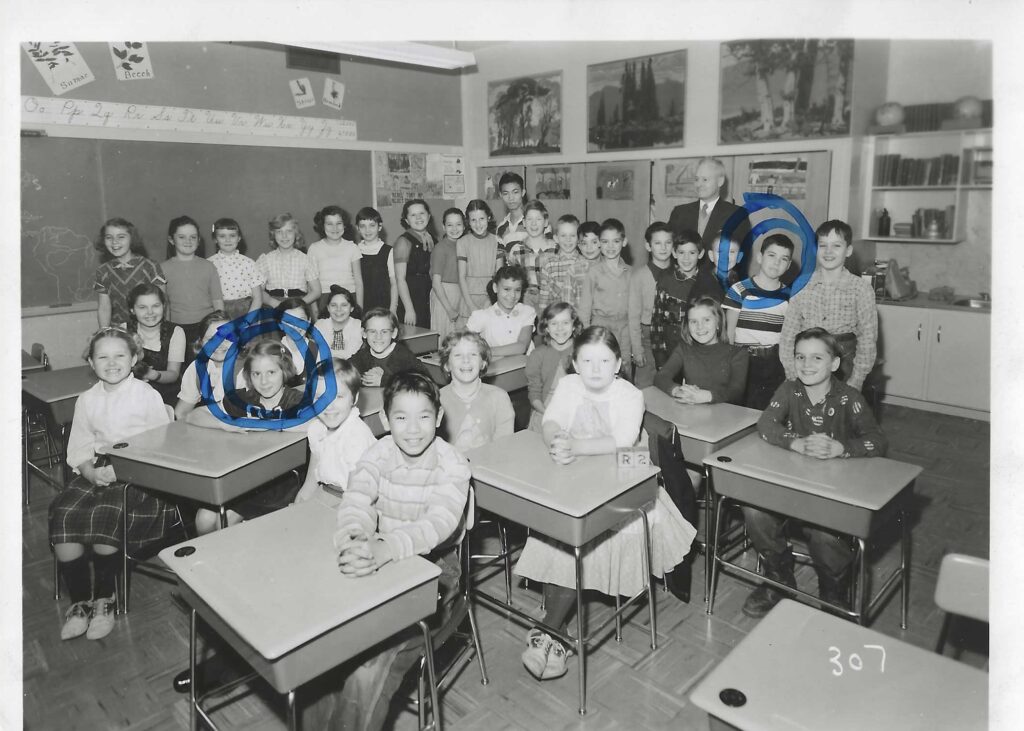
He went on to explain that not only does Mary remember back to kindergarten but, as she told John, “she resented me a little bit because somewhere in grade three or four, I skipped a year and she felt she was just as smart. She was, she is, and she’s right. But you know how it was with girls and boys back then. So she wasn’t happy but I didn’t know, we didn’t communicate at the time. She told me, afterwards, when we got together, she kind of resented that, because she thought she was just as good as I was.” They didn’t start to get to know each other until they were teenagers. Even though they lived just a few blocks apart, the school districts were such that they went to different senior elementary schools and then high schools. Church is what brought them together, Yonge Street United, a big part of both their young lives. John’s memory is that they met around grade eleven because “there was one guy who was front and centre running a lot of the stuff for the church, Bill Davis. A very selfless person and he ran a teen club. So that’s where Mary and I first really got together. There were four marriages out of that teen club, including mine and my sister Cathy.”
Along with playing church league and high school sports, John was a terrific student and refers to himself as “a bit of a goody-two-shoes back then. I never got in trouble. I never did anything wrong. My marks were good, I got an Ontario scholarship and all kinds of money from other scholarships.” Because math was his strongest subject, he decided to enter the University of Toronto studying math, physics and chemistry. Even though students were warned there was a thirty percent failure rate in first year it stunned him when he flunked out. “I didn’t know what I was going to do. I planned to teach math and Phys Ed. So I’m sitting around wondering what to do.” After flipping through the university’s course book, he seized on geography, a course he’d loved in high school. “I was fine after that,” John says. “I did well in geography, got my degree, and ended up with the Ministry of Transportation in the environment section.”
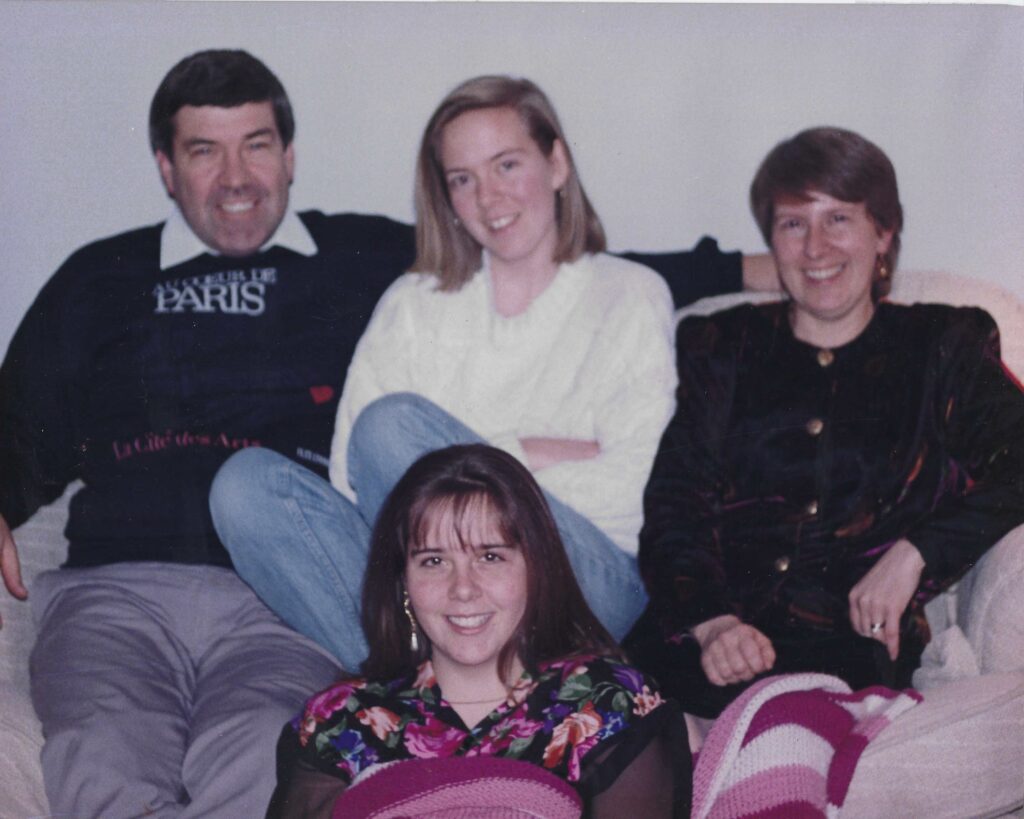
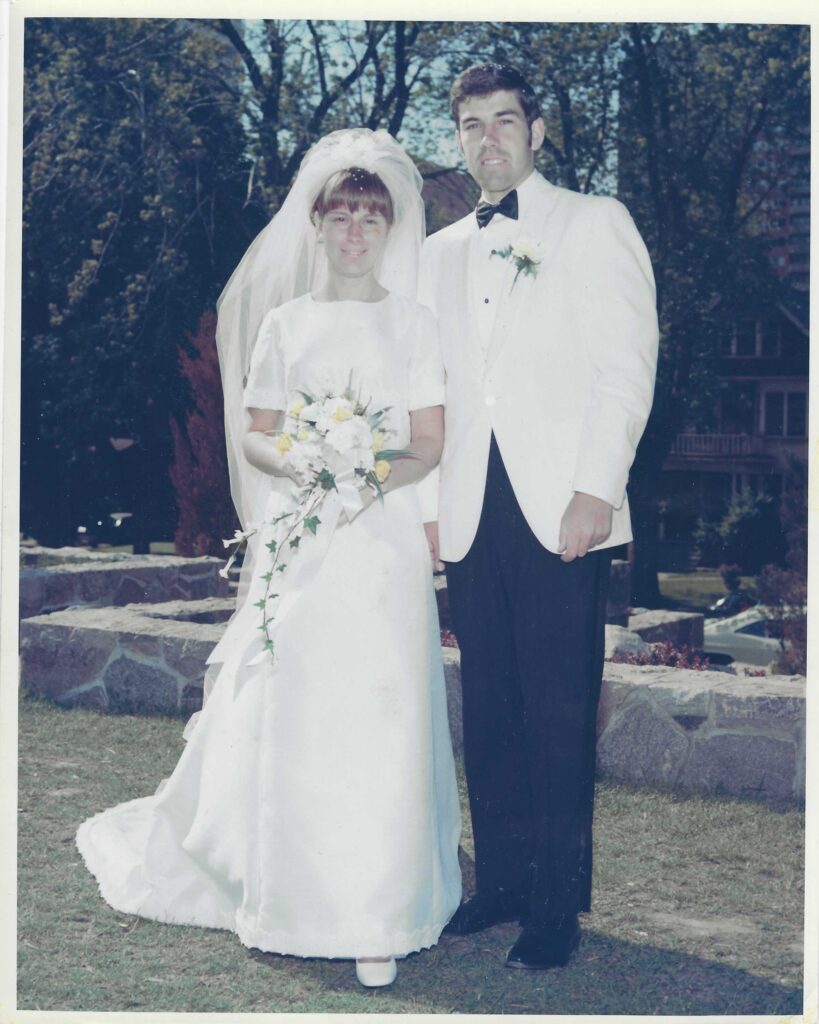
Mary and John were married while he was still in university — she’d left after first year, just not feeling it was right for her. As with most honest baby boomers, John expresses the luck in their life while also noting early financial discipline and starting married life with no extravagance. Her parents owned a large house and rented rooms — pretty much a rooming house — so the newlyweds rented the top floor which had no kitchen. That meant cooking on a hot plate and washing dishes in the bathtub. Though John had started working, they stayed for three years after he graduated, kept washing dishes in the bathtub, and focused on a savings goal for a home downpayment. Mary worked in the accounting department of a real estate company and when her boss told her that housing prices were about to rise significantly they decided to jump early. In John’s view, “we managed to be just ahead of the wave all the time. More by good luck than good management, you know, because we’re not planners. We’ve never been real planners.” Still, they had the good sense of buying a “starter home”, a small two bedroom bungalow, and only moved into their second home — where they lived until long after they retired — after the birth of their second daughter. The house may have been much larger but they’d stayed disciplined by purchasing the classic “fixer-upper”, a place quite rundown inside. Now here is what I meant earlier when I stated John is more well rounded than he admits.
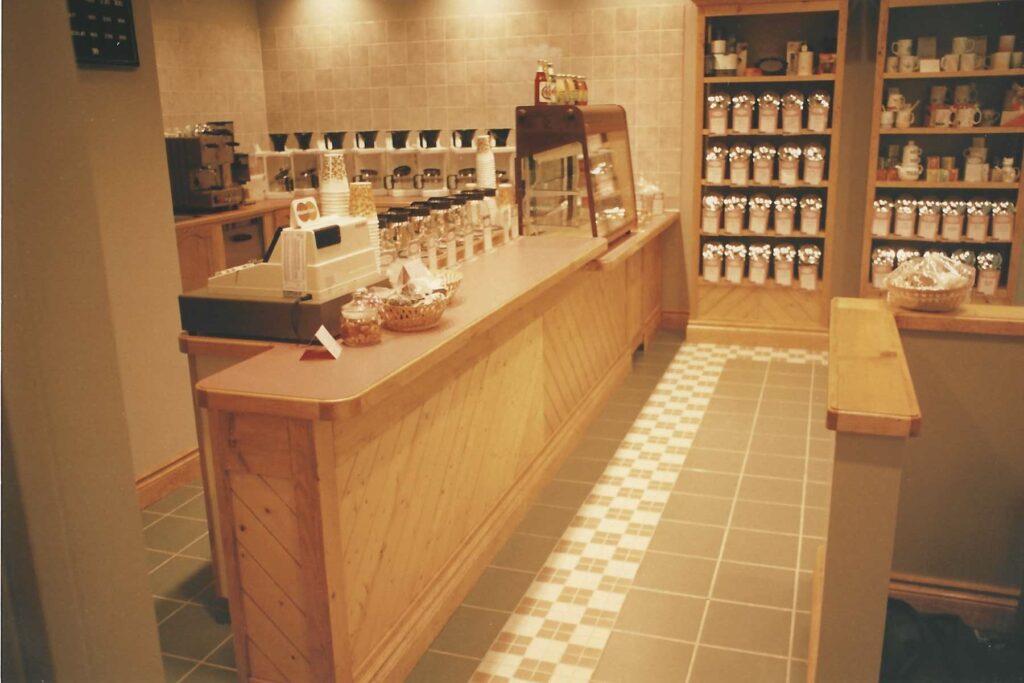
He never saw himself as a “handy guy”, someone to tackle home renovations, and says, in fact, “I hated it at school when I used to take manual training. But after we bought that house I had to get a little handy.” As it turns out, beyond handy, he became something of a carpenter. “Initially, my father-in-law, a self-employed handyman, taught me a lot. Later, I went to this trade show, tools and stuff, and a guy who had a little booth told me about a course he offered on weekends in Belleville.” John attended and it turned out to be very good. “He showed you all kinds of little secrets, shortcuts, where to buy things in Toronto, specialty hinges, unfinished doors that you could finish.” The family ended up buying him a radial saw for Christmas and not only did he renovate the house — and years later a cottage — he ended up being the carpenter who built counters and cabinets for a coffee shop in the North York City Centre called Mocha Magic. Mary’s sister and her second husband asked Mary to become part of a new venture. To contribute, for nine months after work and on weekends, John became a tradesman.
That business venture was, for Mary, the first paid work outside the home since she’d left her job to stay home with their two girls, Jennifer and Heather. But she had been volunteering after the girls got a bit older. It’s in John’s telling me about her experience that you see his admiration for his wife. “She found this opportunity at CNIB (Canadian National Institute for the Blind) to transcribe books and articles into braille. One or two years training but you worked as you trained.” Although a volunteer, Mary put in at least forty hours a week and became so good they asked her to learn how to transcribe math and science material. After a while she became one of the few people in Ontario capable of transcribing university textbooks. Mary stayed with it for twenty years. As John notes, “I was proud of Mary and happy to support her braille work, just as she has always supported me, particularly when I was in career limbo after abandoning my teacher plans.”
Through the eighties and into the nineties, John continued to rise in the managerial ranks of the Ministry of Transportation to the point of becoming Director of the Road Safety Branch. Kim Devooght, the Assistant Deputy Minister who promoted John, ended up joining the Fall Classic a number of years after me. I reached out to Kim by email on any memories he had of that time and he responded by saying “I recall he was the best choice for the role and I never had any regrets. I did have many days though where I would say to John, ‘Are you working for me, or am I working for you?’ John had the right mixture of leadership, passion, patience and impatience for that job and, in my opinion, all Ontarians benefitted. We took advantage of the timing on a few situations and introduced and implemented a very ambitious and aggressive road safety strategy, including Graduated Licensing.”
Of becoming director, what John recalls is he liked the ability to turn research into policy. The program that reduced teen deaths in the province was something he’d been working on as a manager long before the promotion, something that took seven years. Australia and New Zealand had implemented the strategy in the 80s and through research John showcased their success, eventually convincing Ontario politicians of the proper road forward — yup, pun intended once more.
With everything said about John’s focus on work and on family, sports still played a role in life, golfing when he could, fastball in the summer, hockey and bowling in the winter. Travel after retirement of course, but he and Mary began their marriage travelling when they had the time, in particular seeing Canada. Early on, before kids, they embarked on a camping trip to the west coast and spent a night in a tent on the Lake Louise campgrounds. Reading late they heard intermittent dogs barking and sensed maybe it was a bear. “Soon we heard grunting on the other side of the canvas, scared out of our minds, and it seemed to last forever — though probably only a minute or so. After the bear left we heard car doors slamming in other campsites but we stayed put! Measured the paw prints in the morning and confirmed it was a grizzly.” So go the pleasant adventures of tenting in the Canadian Rockies.
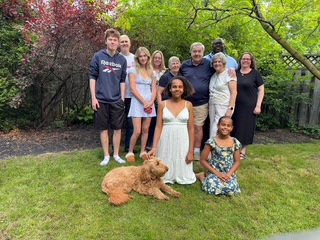
But they survived, John and Mary, raised a family, made contributions to make a better society, and enjoyed life. Looking back over his life, one thing John likes to make clear is that “I have always been happy that we had kids at an early age because our two wonderful daughters now have four terrific children of their own and we’ve been young enough to enjoy our grandchildren.”
For John, sports has always been a big part of that enjoyment which brings us full circle to when I met him — the Fall Classic golf tournament that he’s organized for nearly thirty-five years. When I asked him about expending so much effort in planning all these years he came back with a very straightforward answer: “Simply put, the friendship. The Fall Classic is a way for me to stay in touch with this motley crew of friends that I have, many of whom it is the only chance I have to see every year….I look forward to three days of golf competition, but this has always been secondary to the camaraderie and kibitzing.”
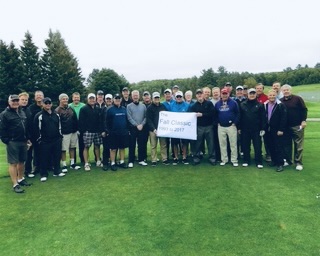
Not long after last year’s tournament we lost one of the stalwarts far too early, Mike Weir — yes, his real name. His family asked John to speak at Mike’s Celebration-Of-Life and the first thing John did was to send out an email to the “motley crew of friends” to solicit stories from everyone, not that he didn’t have his own stories. But that’s John Hughes, inclusive, caring, bringing everyone together even, or perhaps especially, in the saddest of times.
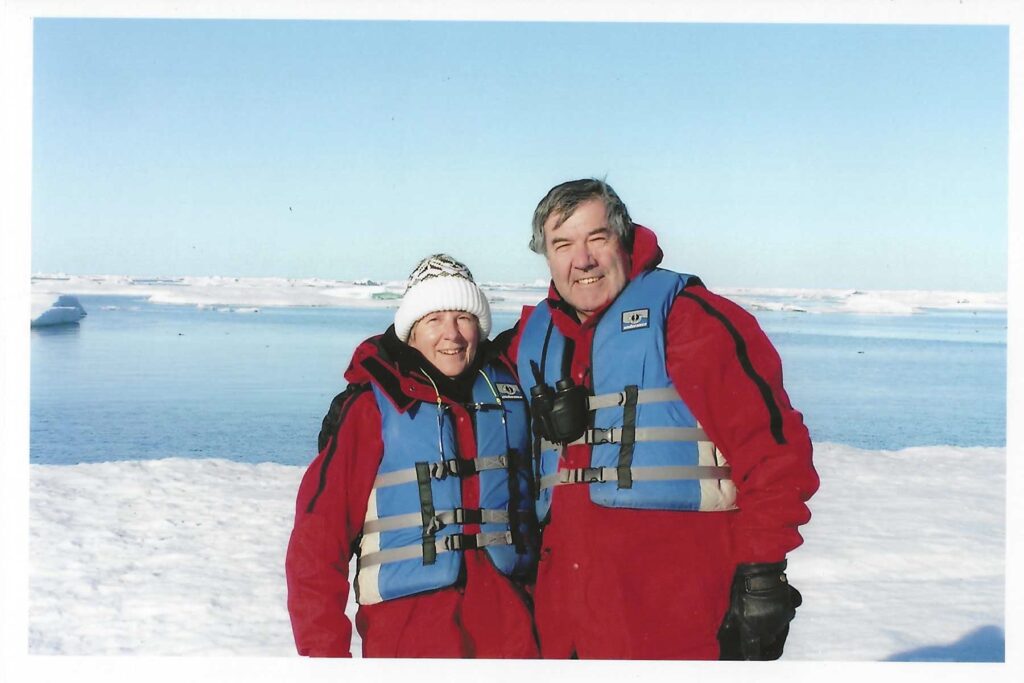
John has tried to enjoy life as much as possible, be it at work, at play, with family and with friends. Maybe being the son of a father who had sacrificed the prime of his life for all six years of World War II, and the son of a mother who had been tireless in dedication to her family, he intuitively learned lessons of how to live. Because I can easily say that, of the many people I have known, John Hughes embodies a life well lived.
Next up is poet Renée Sgroi. A recently retired college professor, she’s immersing herself fully into the writer’s life as an editor, a manuscript coach, and a writing workshop facilitator helping others to find their creative voice. While, of course, continuing to write and publish.
I hope you come back.